On this page
- Selective and confidential factoring for Washington firms, via a broker
- A town laid out around its industrial estates
- Funding chosen invoices from a Washington ledger
- When customers should not know a funder is involved
- Does being near the Nissan plant change the case for factoring?
- Haulage and distribution off the A1(M)
- Agreement terms to read twice
- Sending details from Washington for an initial review

Selective and confidential factoring for Washington firms, via a broker
Invoice Factoring arranges selective, confidential and whole-ledger invoice finance for Washington engineering firms, distributors and trade suppliers. As a broker, we sit between the business and the funder, which provides the money and sets the terms.
Options for an uneven ledger
Selective invoice factoring funds chosen invoices, which suits a workshop with one large order on long terms. Confidential invoice factoring keeps your name on the invoices and collections with your team. Where most sales sit on long terms, full invoice factoring passes collections to the funder.
Our part, the funder's part and yours
You start with an online enquiry or an email. We review your ledger, customers and payment terms, then match you with a funder. The funder carries out its own assessment and sets the advance, fees and conditions. We explain what it offers, and the choice to go ahead is yours.
Every fee shown before you decide
The quote is free and comes with no obligation. We explain every cost, including per-invoice fees and minimum charges, and give an honest view if a facility looks wrong for your business. For engineering and trade firms on estates such as Parsons and Pattinson, that often means funding a single large order without tying up the whole ledger.
A town laid out around its industrial estates
Most B2B trade in the town happens on the industrial estates that were planned alongside its housing. Washington was designated a new town in 1964, and the plan gave the residential villages their own nearby estates so people could work close to home.
Estates named after northern engineers
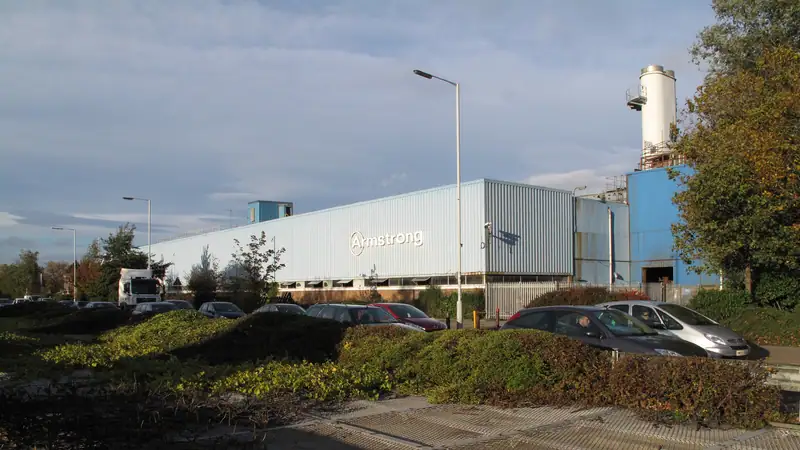
Several estates carry the names of engineers from the region, including Parsons, Armstrong, Stephenson, Crowther, Pattinson, Swan and Emerson. They hold a mix of small workshops, trade counters and larger production units. Parsons is reached by the A182 from the A1 and A194(M) interchange, which suits firms delivering across Tyne and Wear and beyond.
Newer sites on the eastern edge
Hillthorn Business Park and Turbine Business Park sit near the Nissan plant and the International Advanced Manufacturing Park, with access improved by the upgraded A1290. These sites attract manufacturing, warehousing and automotive-related occupiers.
Because the estates mix such different firms, a Washington business may invoice a national retailer, a local builder and a manufacturer in the same week. Each pays on its own cycle, and that uneven pattern shapes which type of facility makes sense.
Funding chosen invoices from a Washington ledger
You can often fund individual invoices or customers instead of the whole sales ledger. A workshop on one of the older estates might invoice dozens of small trade accounts on 30 days, then win a single large order from a manufacturer on much longer terms. Only the large invoice creates a real cash gap.
Fees for selective funding are usually charged per invoice, so the cost per pound funded can be higher than a whole-ledger facility. It suits occasional gaps better than a constant shortfall.
As an illustration only, not a quotation: a Washington engineering firm raises a single £25,000 invoice to a manufacturer on 90-day terms. If a funder approved that invoice and advanced 75%, around £18,750 could be released, less fees, with the balance less charges paid when the customer settled. Actual terms depend on assessment and the written agreement.
When customers should not know a funder is involved
A confidential facility keeps your own name on the invoices and leaves collections with your team. Firms in Washington that supply large manufacturers sometimes prefer this, because a customer's procurement team may question a change in payment details or a notice of assignment.
Funders usually require a sound credit control process, clean accounts and an established trading record, so a newer company may be offered a disclosed facility first. The funder still holds rights over the debts and may switch to disclosed collection if the agreement's conditions are breached. Read that clause carefully.
Does being near the Nissan plant change the case for factoring?
Not on its own. What matters is who you invoice and on what terms. Nissan's plant occupies the former Usworth airfield on the edge of Washington, and many nearby firms supply it indirectly through tier one manufacturers.
If a Washington supplier invoices a tier one manufacturer, the funder will assess that customer, not the carmaker. Expect questions about set-off rights, credit notes for rejected parts and how much of your ledger depends on one buyer. A heavy concentration may mean a lower limit for that customer, whatever the size of the end manufacturer.
Automotive supplier contracts can also include price reviews, cost-down targets and charges for late deliveries, which reduce what is actually paid on an invoice. Share those terms at the start.
Haulage and distribution off the A1(M)
Distribution firms here often carry fuel, driver and vehicle costs weeks before customers pay. The town's position between the A1(M) and the A19 makes it a practical base for hauliers and warehouse operators serving the wider North East.
Funders usually want a signed proof of delivery for each invoice, and missing paperwork is a common reason for an invoice being held back. Invoices raised for storage in advance, or for work not yet delivered, generally fall outside an invoice finance facility.
Haulage customers can fail with little warning, and a carrier may be owed for several weeks of loads when that happens. Operators with a few large accounts may want to ask about bad debt protection, which can cover the insolvency of an approved customer, subject to its terms and limits.
Agreement terms to read twice
The written agreement decides the real cost and flexibility of a facility. Washington firms comparing offers should check these points in each one before signing:
- the minimum term and the notice period to leave;
- any minimum monthly or annual fee, charged even if you fund little;
- the recourse period, after which unpaid invoices come back to you;
- concentration limits on your largest customers;
- personal guarantees or indemnities asked of directors;
- how disputed invoices and credit notes affect your available funds.
Invoice finance also cannot pay for anything before an invoice exists, such as materials for a new contract. Plan that cost separately.
Sending details from Washington for an initial review
A short summary is enough to start: your main customers and their terms, an aged debtors report, annual turnover and any existing finance. Use the quote form or email info@invoicefactoring.org.uk. The areas served page covers the rest of the region, and the Sunderland page looks at the port and wider supply chain.